Hanuman Ansh: How a ₹2 Crore Film Became One of 2026’s Biggest Box-Office Success Stories
There are box-office successes, there are sleeper hits, and then there are films that completely change the conversation around what makes a movie successful.
Hanuman Ansh belongs firmly in the third category.
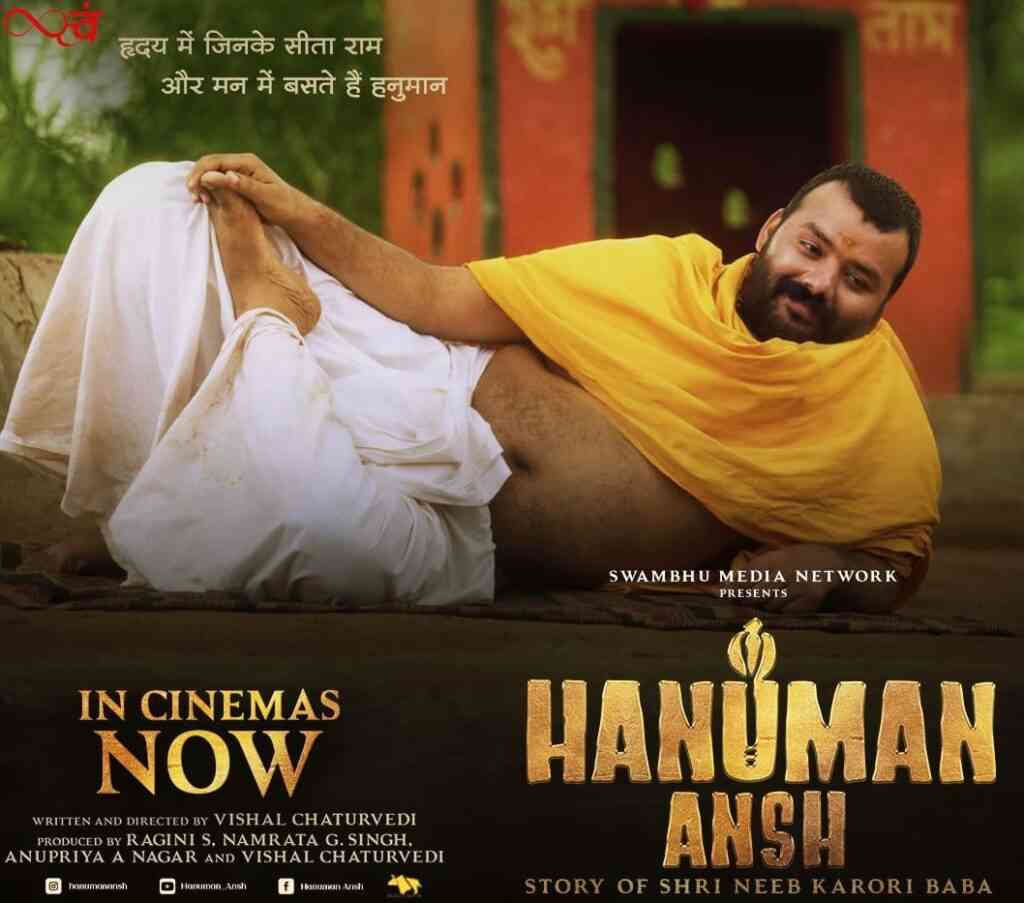
Released on 7 August 2026, Vishal Chaturvedi's spiritual drama arrived in theatres without the traditional machinery normally associated with a major Bollywood release. There was no superstar leading the film, no massive advertising campaign and, initially, not even enough screens to suggest that the movie could become a theatrical success.
The opening numbers appeared to confirm those expectations.
The film reportedly opened at only ₹10 lakh on its first day. During its first two weeks, its theatrical performance remained modest, with reports putting its collection at around ₹1.48 crore.
And then something unusual happened.
Instead of disappearing from theatres, Hanuman Ansh began growing.
The audience started talking about it. Word-of-mouth spread. Shows increased. More people began discovering the film. What initially looked like a small devotional release gradually transformed into one of the most remarkable sleeper-hit stories of 2026.
By its 24th day, reports put its India gross at approximately ₹47.33 crore, while later reports placed its theatrical collection above ₹120 crore.
That journey—from a ₹10 lakh opening to a blockbuster-level theatrical run—is what makes Hanuman Ansh particularly interesting from a filmmaking and business perspective.
The Numbers Tell Only Half the Story
The most extraordinary aspect of Hanuman Ansh is the gap between its initial performance and its eventual success.
The reported production budget was approximately ₹2 crore.
Against that, the film eventually crossed the ₹100 crore mark domestically, according to multiple reports, with later figures going beyond ₹120 crore.
That means the film's reported gross theatrical revenue became many times larger than its production budget.
However, it is important to understand the difference between box-office gross, producer revenue and profit.
When a film earns ₹100 crore at the box office, the entire ₹100 crore does not go directly to the producer. Theatres, distributors and other stakeholders receive their respective shares. Marketing, distribution and other costs also have to be considered.
Therefore, headlines describing the film as generating a "6100% profit" should be viewed as a simplified comparison between reported revenue and its tiny production budget rather than a precise audited profit calculation.
Even after making that distinction, however, the economics remain extraordinary.
A film reportedly made for around ₹2 crore becoming a ₹100-crore-plus theatrical phenomenon is an exceptional return on the scale of investment.
1. The Biggest Reason: The Film Found Its Audience
The first lesson from Hanuman Ansh is simple:
A film does not necessarily need a huge opening if it can continuously find new audiences.
Modern box-office discussions often revolve around opening-day numbers.
Big stars generate advance bookings. Large marketing campaigns create awareness before release. Social media creates hype. A successful trailer can sometimes generate millions of views before the audience has even seen the film.
Hanuman Ansh followed almost the opposite trajectory.
Its opening was extremely small.
But the people who watched it began recommending it.
That changed the nature of the film's theatrical journey.
Instead of depending primarily on pre-release hype, the movie began depending on post-release discovery.
This is perhaps the most important lesson from its success.
The film effectively turned its audience into its marketing department.
2. Word-of-Mouth Became More Powerful Than Advertising
Reports from the film's theatrical run repeatedly point towards word-of-mouth as the major factor behind its turnaround. India Today described the film's rise from ₹10 lakh on opening day to ₹47.33 crore gross in 24 days as a remarkable late turnaround driven by audience response.
That is significant.
Traditional advertising tells audiences:
"Watch this movie."
Word-of-mouth tells audiences:
"I watched this movie, and you should watch it too."
The second message can be much more powerful when the film deals with an emotional or spiritual subject.
People who connected with the story could recommend it to family members, friends and fellow devotees.
The film therefore developed something that money cannot easily manufacture:
trust.
3. The Subject Matter Was Its Greatest Strength
Hanuman Ansh is based on the life and spiritual influence of Neem Karoli Baba, a figure whose following extends far beyond conventional cinema audiences.
The film's subject immediately gives it access to a demographic that is often underestimated by mainstream Bollywood marketing.
This isn't simply an audience looking for entertainment.
For many viewers, the subject has a personal, emotional and spiritual connection.
That creates a very different relationship between the audience and the film.
A conventional commercial film may attract audiences because they want excitement, comedy, action or romance.
A spiritual film can attract audiences because viewers feel that watching it is also an emotional or devotional experience.
That distinction appears to have been crucial to Hanuman Ansh.

4. The Neem Karoli Baba Connection Created a Natural Community
One of the fascinating aspects of the film's success is that it did not have to create an audience from zero.
Neem Karoli Baba already has a significant spiritual following.
His association with figures such as Steve Jobs, Mark Zuckerberg and Larry Page has also contributed to international interest in his life and teachings.
The film therefore entered theatres with something extremely valuable:
an existing emotional ecosystem.
Once members of that community began watching and discussing the film, awareness could spread organically.
This is a powerful lesson for independent filmmakers.
Sometimes the most valuable audience is not the largest audience.
It is the audience that cares the most.
5. Its Small Budget Became an Advantage
At first glance, a ₹2 crore budget looks like a major disadvantage.
But in the case of Hanuman Ansh, it eventually became one of the film's greatest strengths.
Why?
Because the movie did not have to earn hundreds of crores merely to recover its investment.
A large-scale commercial film may require enormous box-office numbers simply to reach profitability because production and marketing expenses can be extremely high.
Hanuman Ansh operated from a completely different economic equation.
If the reported ₹2 crore production budget is accurate, even a relatively modest theatrical collection could have changed the film's financial status.
Once the movie crossed several multiples of its budget, the risk-reward equation became extraordinary.
This is one reason why return on investment is sometimes more meaningful than absolute box-office numbers.
6. The Film Proved That Star Power Is Not the Only Form of Power
The cast did not carry the conventional commercial star power associated with major Bollywood blockbusters.
Shobhinaw Satyaa plays Neem Karoli Baba, alongside actors including Chandan Anand.
Interestingly, Satyaa's journey itself became part of the film's story.
He had been involved with the project as an assistant director before eventually taking on the lead role. Reports say that his understanding of the script and spiritual nuances impressed the filmmakers.
This is an important development.
The industry frequently assumes that recognisable stars are necessary to guarantee an opening.
Hanuman Ansh demonstrates another possibility:
When the subject itself has enough emotional weight, the audience may accept an unfamiliar face.
In fact, the absence of conventional star baggage may have helped the film.
The audience could focus more on the character and the spiritual journey rather than the celebrity playing the role.
7. Authenticity Worked Better Than Spectacle
One of the interesting observations from available reviews is that the film's strongest quality isn't necessarily technical spectacle.
Rotten Tomatoes currently lists a 3.5/5 review from DNA India that describes the film as moving and impressive primarily because of Neem Karoli Baba's journey rather than filmmaking polish.
That distinction matters.
The film does not appear to have won its audience through spectacular VFX, massive action sequences or elaborate production design.
Instead, its core selling point was:
the story.
That is particularly important for independent filmmakers.
A limited budget does not necessarily prevent a film from connecting with audiences.
What matters is whether the limitations interfere with the emotional experience.
If the central story is strong enough, viewers may forgive technical shortcomings.
8. The Third-Week Explosion Is the Real Story
Perhaps the most interesting part of the film's box-office trajectory is not that it eventually crossed ₹100 crore.
It is when the growth happened.
The movie didn't explode immediately.
Its first two weeks were relatively weak.
Then the film experienced a dramatic acceleration around its third and fourth weeks. NDTV reported that the film crossed ₹40 crore net and ₹47.33 crore gross in India within 24 days.
That is almost the reverse of the conventional blockbuster model.
Normally:
Week 1 → Huge opening → Gradual decline
Hanuman Ansh effectively followed:
Week 1 → Weak opening → Audience discovery → Word-of-mouth → Rapid growth
That makes it a textbook example of a sleeper hit.
9. The Film Benefited From the Power of Audience Timing
Another factor was the theatrical environment.
The movie was competing for attention against much larger productions, including major releases such as Toxic and other commercial titles.
Yet Hanuman Ansh managed to remain relevant while bigger films occupied much of the industry's attention.
At one point, reports noted that the film was outperforming Toxic on certain weekday comparisons.
This demonstrates something important about theatrical competition.
A film does not necessarily need to defeat another movie everywhere.
It only needs to establish a sufficiently strong audience segment of its own.
The Hanuman Ansh audience was not necessarily choosing between two identical products.
Someone looking for a spiritual, devotional experience could have a completely different reason for buying a ticket than someone looking for an action blockbuster.
10. The Audience Experience Became Part of the Product
Reports also describe theatres developing a devotional atmosphere around the film.
That is commercially significant.
A movie can sometimes become more than a movie.
It can become an experience.
When audiences discuss the film after watching it, recommend it to relatives, return with family members or treat the theatrical visit as a spiritual outing, the film's theatrical lifespan can extend significantly.
This may explain why the film did not behave like a conventional release.
It wasn't simply dependent on the curiosity of opening weekend.
Its audience could continue expanding.
11. The Makers Took a Different Promotional Route
Another unusual aspect of Hanuman Ansh was the reported emphasis on spiritual and community-oriented activities rather than conventional Bollywood-style promotion.
Reports have highlighted activities including bhandaras associated with the film's promotional journey.
Whether every promotional decision directly translated into ticket sales is impossible to quantify.
But strategically, the approach made sense.
Instead of trying to make the film appear like a conventional commercial spectacle, the marketing remained connected to the film's spiritual identity.
That is a valuable principle:
The marketing of a film should understand the psychology of its audience.
A spiritual film does not necessarily need to market itself like an action franchise.
12. The Film's Success Challenges the "Opening Weekend" Culture
For years, Bollywood has increasingly focused on Friday numbers.
₹20 crore opening.
₹50 crore opening weekend.
₹100 crore weekend.
These figures are attractive headlines, but Hanuman Ansh provides a reminder that theatrical success can take different forms.
A film can open quietly and still become a blockbuster.
In fact, its slow beginning may have helped create the perception that the movie was a discovery.
Once audiences started hearing that a ₹2 crore film was performing unexpectedly well, curiosity itself became another marketing mechanism.
The story became:
"You have to see what is happening with this film."
And that can be extremely powerful.
13. The Film Also Benefited From a Strong Emotional Proposition
The film's premise revolves around faith, loss, spirituality, service and divine connection.
Those themes are inherently emotional.
According to Bollywood.com, the story follows a grieving boy searching for God and ultimately discovering a path of service and spiritual transformation associated with Neem Karoli Baba.
Such a premise provides multiple entry points for audiences.
Someone may come for Neem Karoli Baba.
Another person may come because of the spiritual message.
Someone else may come because a family member recommended it.
Another viewer may simply become curious after hearing about its unusual box-office performance.
That is how niche films can gradually become mainstream.
14. The Success Is Not Just About Religion
It would be too simplistic to describe Hanuman Ansh merely as a "religious film that succeeded."
Its larger significance is that it demonstrates the commercial potential of strongly targeted content.
Indian audiences are not one homogeneous market.
There are audiences for:
mythology
spirituality
biography
regional stories
social dramas
horror
comedy
action
experimental cinema
devotional cinema
The challenge is finding the right audience.
Hanuman Ansh appears to have done exactly that.
15. The Film Shows the Difference Between Hype and Demand
Hype can generate an opening.
Demand can sustain a theatrical run.
That distinction may be the biggest business lesson from Hanuman Ansh.
A large promotional campaign can convince people to watch a film once.
But only audience satisfaction can convince them to recommend it.
In the case of Hanuman Ansh, the evidence suggests that demand grew after release.
That is much harder to achieve than simply generating pre-release hype.
16. The Industry Should Pay Attention
Filmmaker Anubhav Sinha has reportedly described the successes of Hanuman Ansh and Mirzapur: The Movie as more than isolated "freak hits," arguing that box-office performance is telling the industry something about changing audience tastes.
That is perhaps the most important industry-level takeaway.
The audience may be becoming less predictable.
Big-budget films can succeed.
Star-driven films can succeed.
Franchise films can succeed.
But so can extremely small films when they discover the right audience and deliver an experience that viewers genuinely value.
17. What Independent Filmmakers Can Learn From Hanuman Ansh
For independent filmmakers, the success of Hanuman Ansh offers several practical lessons.
1. Don't confuse budget with audience value
A bigger budget can improve production quality, but it doesn't automatically create audience demand.
2. Know your core audience
The film understood that spirituality and Neem Karoli Baba could create a deeply committed audience.
3. Word-of-mouth is still king
Digital marketing can generate awareness, but genuine audience recommendation remains extremely powerful.
4. Don't panic after a weak opening
A ₹10 lakh opening would be devastating for many productions.
But the film's later trajectory shows that an opening number is not necessarily the final verdict.
5. Build an experience around the film
When a film's themes connect with community, culture or spirituality, promotional activities can become extensions of the movie itself.
6. Content can create stars
Shobhinaw Satyaa's journey from assistant director to lead actor demonstrates how the right project can provide an unknown performer with enormous visibility.
7. A niche can become a mass audience
A film doesn't always have to appeal to everyone on day one.
It needs to deeply connect with someone first.
18. Is Hanuman Ansh a Blockbuster?
From a conventional commercial perspective, the answer is increasingly difficult to dispute.
With reported production costs of around ₹2 crore and domestic theatrical collections eventually exceeding ₹100 crore—and later reports placing the figure above ₹120 crore—the film has achieved an extraordinary financial multiple.
More importantly, it achieved that result after opening at just ₹10 lakh.
That makes the film not merely a blockbuster, but a rare sleeper-blockbuster phenomenon.
Its importance isn't only the amount of money it earned.
It is the trajectory.
19. The Real Success of Hanuman Ansh
Ultimately, the biggest success of Hanuman Ansh is not ₹50 crore, ₹100 crore or ₹120 crore.
It is the fact that the film managed to make audiences care.
A movie with limited resources entered theatres quietly.
Audiences discovered it.
They talked about it.
More people came.
Theatres increased its visibility.
Its numbers began attracting industry attention.
And eventually, the film became the story.
That is the dream of every independent filmmaker.
Not simply to release a film.
But to create something that audiences refuse to let disappear.
Final Verdict: A Box-Office Case Study That Filmmakers Should Study
Hanuman Ansh is one of the most fascinating theatrical success stories of 2026 because it achieved what the modern film business increasingly considers difficult: it created momentum after release rather than before it.
The film's journey can be summarised in one line:
₹2 crore budget → ₹10 lakh opening → weak first two weeks → explosive word-of-mouth → sustained theatrical growth → ₹100 crore-plus phenomenon.
Its success demonstrates that the theatrical market is still capable of surprising everyone.
Stars matter.
Marketing matters.
Screens matter.
Budgets matter.
But ultimately, audience connection matters most.
Hanuman Ansh did not enter theatres as the biggest film.
It became big because audiences decided that it deserved to be seen.
And perhaps that is the most valuable lesson the film industry can take from its success.
Filmkar Analysis Rating: ⭐ 4/5
Box Office Impact: ⭐⭐⭐⭐⭐
Audience Connect: ⭐⭐⭐⭐⭐
Word-of-Mouth: ⭐⭐⭐⭐⭐
Return on Investment: ⭐⭐⭐⭐⭐
Technical Execution: ⭐⭐⭐½
Industry Significance: ⭐⭐⭐⭐⭐
Bottom Line: Hanuman Ansh is more than a surprise hit. It is a compelling case study in how content, community, faith, word-of-mouth and disciplined economics can overcome the traditional advantages of star power and massive marketing budgets.